How AI Improves Fleet Management in 2026: A Practical Guide
On this page (8)
Running a fleet has always been a numbers game: vehicles on the road, kilometres driven, litres of fuel, hours of downtime and the cost of every breakdown. What has changed is how much data a modern fleet generates and how much of it a person can realistically act on. That is where artificial intelligence earns its place.
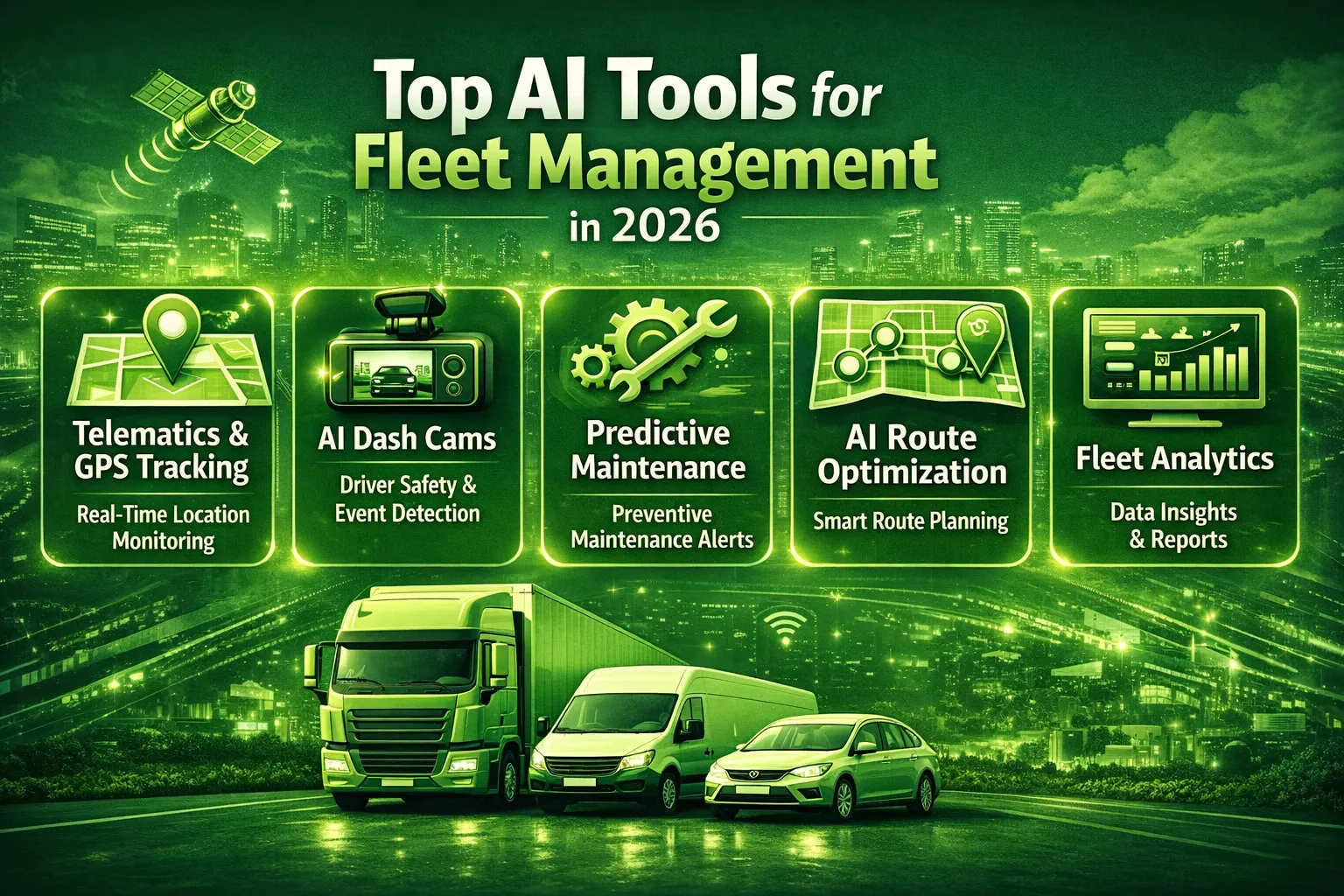
AI in fleet management is not a single product. It is a set of capabilities, each solving a specific operational problem with a specific kind of data. This guide explains the main AI capabilities fleets use in 2026, what each one solves, what data it needs, how to get started and how to judge whether an AI fleet solution will actually deliver.
Why AI Has Become Central to Fleet Management
The days of paper logbooks and purely reactive maintenance are fading. Logistics, transport, taxi, rental and last-mile delivery operators all face the same pressures: tighter margins, higher customer expectations and more vehicles spread across more locations.
AI helps in five broad ways:
- Predictive insight – spotting likely failures and problems before they happen.
- Real-time optimisation – adapting routes and assignments as conditions change.
- Behaviour analysis – understanding how vehicles are driven and coaching drivers to improve.
- Cost control – finding waste in fuel, maintenance and asset utilisation.
- Less manual reporting – turning raw data into reports and alerts automatically.
AI does not replace fleet managers. It amplifies their decisions by processing far more data than a team could review by hand and surfacing the few things that need attention today.
The Core AI Capabilities Fleets Use
Predictive maintenance
What it solves: unplanned breakdowns, missed delivery windows and expensive emergency repairs.
Machine learning analyses vehicle data, sensor readings and past repair history to find patterns that tend to come before a failure. Instead of waiting for a vehicle to stop on the highway, the fleet team gets an early warning and can schedule the repair at a convenient time.
Data needed: telematics and diagnostic data, mileage, service and repair history, and ideally parts replacement records. The longer and cleaner the history, the more useful the predictions.
Route optimisation and dispatch
What it solves: wasted kilometres, late pickups and deliveries, and poor use of driver time.
Optimisation tools combine live location, historical journey times, delivery priorities and vehicle availability to suggest better routes and better driver allocation. For taxi and dispatch operations this means faster pickups; for delivery fleets it means more realistic schedules.
Data needed: GPS location data, order or booking details, delivery windows, vehicle capacity and historical trip data.
Fuel and expense monitoring
What it solves: rising fuel bills, unexplained consumption and costs that are hard to attribute.
Analytics compare fuel use across vehicles, routes and drivers to highlight outliers, such as a vehicle consuming noticeably more than similar ones, or excessive idling on certain routes. Combined with other operating costs, this shows where money is actually going.
Data needed: fuel transactions or fuel-level readings, odometer data, trip data and expense records.
Driver behaviour and safety scoring
What it solves: risky driving, avoidable wear and tear, and inconsistent driver performance.
By analysing speed, braking, route adherence and driving hours, AI builds scorecards for each driver. Managers can then coach individuals on specific habits rather than issuing generic warnings, and recognise drivers who perform well.
Data needed: telematics events (speed, harsh braking, acceleration), route plans versus actual routes, and duty hours.
Computer vision for inspections and safety
What it solves: slow, inconsistent manual checks and safety issues that sensors alone cannot see.
Computer vision and object recognition analyse images or video. In fleet operations the most practical uses are making vehicle and component inspections faster and more consistent, and, where in-cab or road-facing cameras are fitted, flagging unsafe situations for review.
Data needed: images or video from inspections or cameras, labelled examples of defects or events, and clear rules about what should trigger an alert.
Automated compliance and reporting
What it solves: hours spent compiling reports, and the risk of missing a compliance issue.
Instead of copying numbers into spreadsheets, reporting tools pull data directly from vehicles and systems into dashboards and scheduled reports. Monitoring of speed, braking and legal driving hours supports compliance with safety regulations, and alerts flag problems as they appear.
Data needed: telematics, driver hours, maintenance records and whatever documents your regulators and customers require.
Demand and capacity forecasting
What it solves: too many idle vehicles on quiet days and too few on busy ones; parts that run out at the wrong moment.
Forecasting models use historical activity, seasonal patterns and regional demand to predict how many vehicles, drivers or spare parts you will need. Rental and leasing businesses use the same idea to plan availability.
Data needed: historical bookings, trips or orders, seasonal and regional trends, and parts usage history.
Anomaly detection, geofencing and theft prevention
What it solves: unauthorised vehicle use, unexpected route deviations and theft.
Geofencing triggers alerts when a vehicle enters or leaves a defined area. Anomaly detection goes further by learning what “normal” looks like for each vehicle (typical routes, hours and fuel use) and flagging behaviour that does not fit, such as movement at unusual times or fuel loss that does not match distance travelled.
Data needed: real-time GPS, defined zones, normal operating hours and fuel data.
Natural language assistants
What it solves: managers and customers waiting for answers that already exist in the data.
Large language models (LLMs) let people ask questions in plain language. For a fleet, that could mean a customer-facing assistant that handles booking queries for a rental or taxi service at any hour, or an internal assistant that helps staff find information without digging through reports.
Data needed: booking and service information, FAQs and access to the relevant business systems.
AI Capabilities at a Glance
| AI capability | Problem it solves | Data it needs |
|---|---|---|
| Predictive maintenance | Unplanned breakdowns and downtime | Diagnostics, mileage, service history |
| Route optimisation | Wasted kilometres, late deliveries | GPS, orders, delivery windows |
| Fuel and expense monitoring | High or unexplained running costs | Fuel records, trip and expense data |
| Driver scoring | Risky driving and inconsistent performance | Speed, braking, route adherence, hours |
| Computer vision | Slow, inconsistent inspections | Images or video, labelled examples |
| Automated reporting | Manual reporting effort, compliance gaps | Telematics, driver hours, maintenance logs |
| Demand forecasting | Too many or too few vehicles and parts | Historical bookings, seasonal trends |
| Anomaly detection and geofencing | Misuse and theft | Real-time GPS, zones, operating patterns |
How to Get Started with AI in Your Fleet
You do not need to adopt every capability at once. A step-by-step approach usually works best.
1. Pick the problem that costs you most
Start with where you lose the most time or money today. If breakdowns are your biggest headache, begin with predictive maintenance. If fuel is your largest controllable cost, start there. A clear problem makes it much easier to measure whether AI is helping.
2. Get your data foundations right
AI is only as good as the data behind it. Most fleets need reliable GPS and telematics, a digital record of maintenance and a consistent way of recording fuel and expenses. If maintenance history lives in paper files or scattered spreadsheets, digitising it is a worthwhile first project in its own right. Our fleet management software guide covers these foundations in more detail.
3. Connect, don’t duplicate
Fleet data is usually spread across telematics devices, accounting software, CRM and dispatch tools. Connecting these into one platform gives AI a complete picture and saves your team from entering the same data twice.
4. Pilot, measure and expand
Run the first capability on part of the fleet, compare results against your baseline (downtime, fuel per kilometre, on-time performance or whichever metric matters most) and then roll it out more widely. Once the first use case is working, add the next one.
5. Bring drivers and staff along
Driver scoring and monitoring work best when drivers understand why they are being measured and how the feedback helps them. Share scorecards openly, focus on coaching rather than punishment, and recognise improvement.
How to Evaluate an AI Fleet Solution
Not every product labelled “AI” offers genuine intelligence. Use these questions when comparing options.
Does it fit your goals?
Be clear whether your priority is cost, safety, uptime, routing or customer service. A solution strong in one area may be weak in another.
Is the AI meaningful?
Look for models that learn from your data and forecast trends, not just fixed rules relabelled as AI. Ask how predictions are generated and how accuracy is checked over time.
Will it integrate with what you have?
Check that it connects with your telematics hardware, accounting software, CRM and any dispatch or ERP systems. Poor integration is one of the most common reasons fleet software fails to deliver.
Is it easy to use?
If dispatchers, workshop staff and drivers find the system awkward, they will work around it. Ask for a demo using scenarios from your own operation.
Can it scale and adapt?
Your solution should grow with the fleet, and ideally adapt to your workflows rather than forcing you into someone else’s. Custom-built or configurable software can matter here if your operation has unusual requirements.
How is data secured?
Vehicle locations and driver data are sensitive. Ask about encrypted storage, secure communication, access controls and audits.
How AutoTech360 Helps Fleets Use AI
AutoTech360 builds software only for the automotive industry, and fleets are a core part of that work.
AutoTech360 Fleet brings the foundations together in one system, with an offline driver app:
- Preventive service reminders – services due by days, distance, engine hours or a mix, whichever comes first, recalculated with every meter reading, plus faults and work orders from drivers and the office.
- Documents with an expiry ladder – insurance, permits and licences warned at 90, 60, 30 and 7 days, with the vehicle or driver taken out of service when a blocking document lapses.
- Walkarounds and trips – a pre-trip checklist before every run, trips run stop by stop, and proof of delivery with the receiver’s signature and photo.
- Live map and driver safety – positions, trails and geofences from your trackers, with speeding, harsh driving and idling feeding a driver safety score.
- Fuel log with fraud checks – tank-to-tank consumption for every fill, flagged when a fill does not fit the tank, the odometer or the vehicle’s usual range.
- Reports, recommendations and AI – twenty-three reports from cost per vehicle to profit by trip, recommendations raised unasked, receipts and photos read into entries for someone to confirm, and an assistant that answers questions about your own fleet.
Taxi operators and rental companies have their own products: the taxi booking app and AutoTech360 Rental.
Where you want to go further, our AI and digital transformation services build custom AI projects on your own data, such as predictive maintenance from telematics fault codes and repair history, photo-based inspection, demand forecasting and chat assistants for customer enquiries and bookings.
The aim is simple: decisions based on data instead of guesswork, and more of your fleet on the road and earning. To see how this would work for your vehicles and workflows, book a demo.
Conclusion
AI in fleet management in 2026 is less about futuristic promises and more about practical gains: fewer breakdowns, better routes, lower fuel bills, safer drivers and less time spent on reports. Each capability depends on the right data, so the best results come from strong foundations, one clear starting problem and steady expansion from there. Whether you run ten vehicles or several hundred, AI can help you get more from every one of them.
Frequently Asked Questions
What is AI used for in fleet management?
AI is used for predictive maintenance, route optimisation, fuel and expense monitoring, driver behaviour scoring, computer vision inspections, automated reporting, demand forecasting and detecting misuse or theft. Together these reduce costs, improve safety and keep more vehicles available for work.
How does machine learning improve fleet management?
Machine learning analyses large volumes of vehicle, driver and operational data to find patterns people would miss, such as early signs of a component failure, routes that consistently waste fuel or driving habits that increase risk. It then turns those patterns into alerts, forecasts and recommendations.
What data do I need before adopting AI for my fleet?
At minimum you need reliable GPS and telematics data, digital maintenance and service records, and consistent fuel and expense records. Booking or order history helps with routing and forecasting. If much of this is still on paper or in spreadsheets, digitising it is the right first step.
Can AI be added to my existing fleet software?
Often, yes. AI capabilities can be integrated with existing fleet, CRM and accounting systems rather than replacing everything at once. AutoTech360 adds AI to the fleet platforms clients already use as well as to the systems we build.
How do I choose the right AI fleet management solution?
Start with the problem that costs you most, then check whether a solution uses genuine machine learning, integrates with your current tools, is easy for your team to use, can scale with your fleet and protects your data properly. A demo built around your own scenarios is the best test.