What Is Automotive Dealer Software? A Practical Guide for Dealerships

On this page (10)
- What Is Automotive Dealer Software?
- Why Modern Dealerships Are Adopting Dealer Management Software
- Key Features of Automotive Dealer Software
- Choosing the Right Dealer Management Software for Your Dealership
- How AI Is Transforming Automotive Dealer Software
- Benefits for Sales Teams
- Benefits for Customers
- Building a Future-Ready Dealership
- Final Thoughts
- Frequently Asked Questions
The automotive industry is becoming increasingly digital, and dealerships can no longer rely on spreadsheets, disconnected applications, and manual processes to manage daily operations. From customer inquiries and vehicle inventory to sales follow-ups, service appointments, and financial reporting, every department needs accurate and accessible information.
This is where automotive dealer software becomes valuable. A modern dealer management platform brings key dealership functions together, helping teams reduce repetitive work, improve customer experiences, and make faster business decisions.
What Is Automotive Dealer Software?
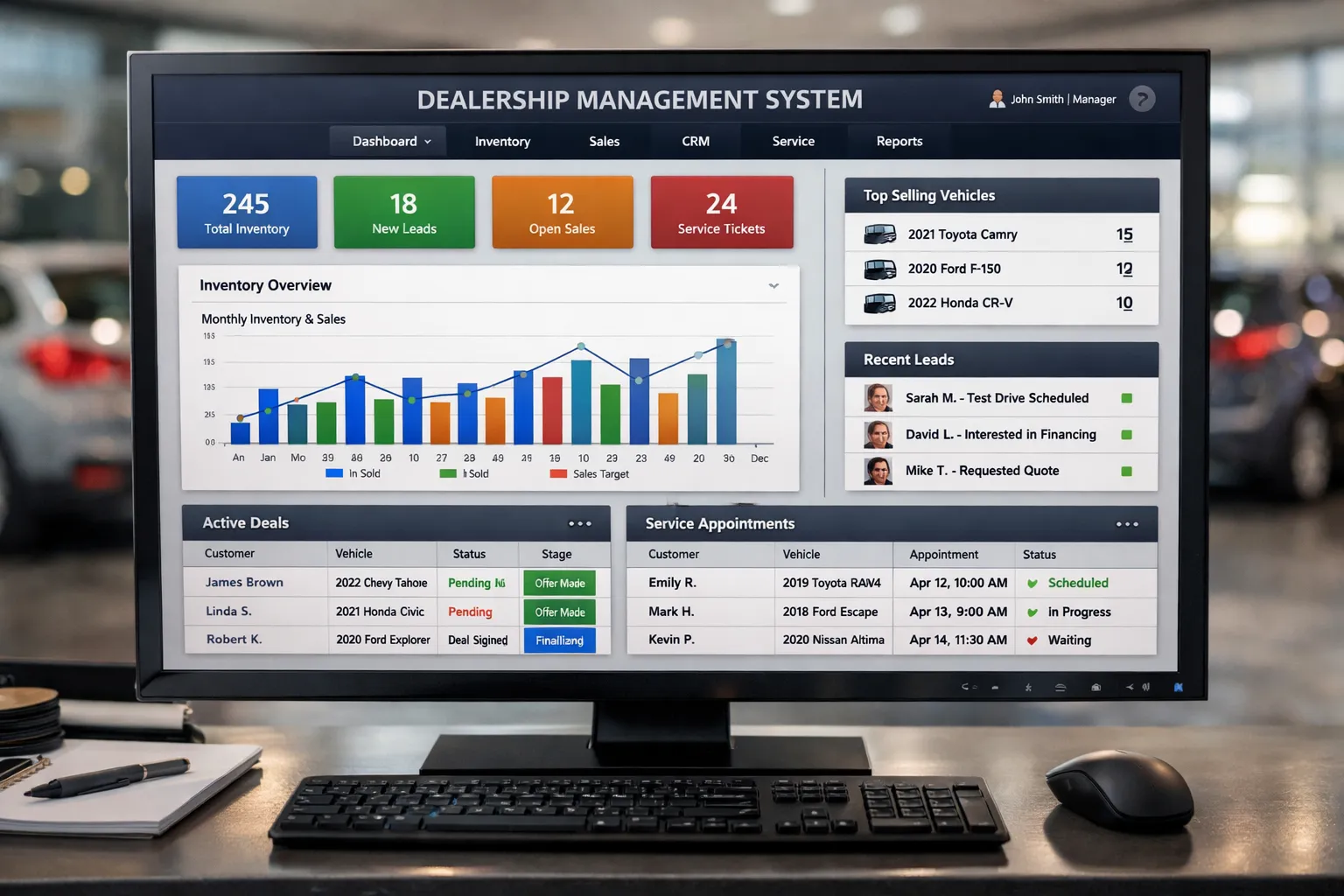
Automotive dealer software is a centralized technology solution designed to manage the different activities involved in running a dealership. It can connect sales, inventory, customer relationship management, service operations, finance, reporting, and other dealership processes within a single digital environment.
Instead of switching between multiple systems, employees can access important information from one platform. This creates better coordination between departments and gives management a clearer view of dealership performance. Software that covers these functions end to end is usually called a dealer management system (DMS).
Why Modern Dealerships Are Adopting Dealer Management Software
Traditional dealership processes often involve manual data entry, phone-based follow-ups, spreadsheets, and separate software tools. These methods can create information gaps and make it difficult to respond quickly to customers.
A modern dealer management system can help dealerships:
- Centralize customer and vehicle information
- Track leads and sales opportunities
- Monitor vehicle inventory in real time
- Automate customer follow-ups
- Manage service appointments
- Generate business reports
- Improve communication between departments
- Reduce administrative workloads
- Support data-driven decision-making
The goal is not simply to replace manual processes with software. The bigger advantage is creating a connected dealership where information can move efficiently between teams.
Key Features of Automotive Dealer Software
1. Customer Relationship Management
A built-in automotive CRM helps sales teams maintain detailed customer profiles, track inquiries, record interactions, and monitor the sales journey.
Dealerships can identify where each prospect is in the buying process and schedule timely follow-ups. Automated reminders can also reduce the possibility of leads being forgotten.
2. Vehicle Inventory Management
Inventory is one of the most important components of dealership operations. Software can provide visibility into available vehicles, sold units, incoming stock, pricing, specifications, and other relevant information.
Sales representatives can quickly check vehicle availability instead of depending on manual records or contacting another department.
3. Lead Management
Customers may arrive through websites, social media, advertisements, marketplaces, phone calls, or walk-ins. Dealer software can bring these leads into a centralized system.
Teams can assign leads to sales representatives, monitor response times, track conversion stages, and evaluate which channels generate the best opportunities.
4. Sales Pipeline Management
A digital sales pipeline provides a visual representation of prospects as they move from inquiry to purchase.
Managers can monitor sales activity, identify stalled opportunities, and understand individual or team performance. This makes sales forecasting more practical and transparent.
5. Service and Workshop Management
Modern dealerships need to manage customers beyond the initial vehicle purchase. Service management capabilities can help schedule appointments, assign jobs, track repair progress, manage technicians, and maintain service histories.
This creates opportunities for dealerships to improve customer retention and build long-term relationships.
6. Finance and Documentation
Vehicle purchases involve quotations, financing information, insurance details, payments, and documentation. A connected platform can organize these processes and reduce unnecessary paperwork.
Automated workflows can also help employees complete routine tasks more consistently.
7. Analytics and Reporting
Management teams need reliable information to understand dealership performance. Reporting dashboards can provide insights into sales, inventory turnover, lead conversion, revenue, service activity, and employee performance.
With better data visibility, decision-makers can identify trends and take action sooner.
8. Spare Parts Management
Parts sales and workshop jobs depend on knowing what is on the shelf. Parts management tracks stock levels, bin locations, pricing, warranty details and supplier information, and reserves parts against service jobs so technicians are not left waiting.
9. Multi-Branch Management
Dealer groups with several showrooms or workshops need one view across every location. Multi-branch support lets management compare sales, stock and service performance by branch, move vehicles and parts between sites, and control what each team can see.
10. Accounting and Tax
Invoices, payments, taxes and expenses should flow into the books without being keyed in twice. Built-in accounting, or an integration with your existing accounting system, keeps ledgers accurate and makes tax filing and audits easier.
11. Mobile and Cloud Access
Sales staff on the showroom floor, advisors in the service lane and managers away from the office all need current information. Cloud-based software with mobile apps lets each team check stock, update a deal or approve a job from a phone or tablet.
12. Security and Backups
Dealer software holds customer identities, finance details and business records. Look for role-based permissions, encrypted data, activity logs and automatic backups so information is protected and the business can recover quickly if something goes wrong.
Choosing the Right Dealer Management Software for Your Dealership
Choosing the right platform requires more than comparing feature lists. Dealerships should consider their operational requirements, business size, customer journey, existing technology, and future growth plans.
When evaluating dealer management software, consider the following factors:
Scalability: The platform should support increasing users, vehicles, branches, customers, and transactions as the business grows.
Integration: It should connect effectively with CRM platforms, accounting tools, websites, marketing systems, payment solutions, and other dealership technologies.
Ease of use: Employees should be able to learn and use the platform without unnecessary complexity.
Automation: Look for workflows that reduce repetitive activities such as follow-up reminders, notifications, appointment scheduling, and reporting.
Security: Customer, financial, and business information should be protected through appropriate authentication, permissions, backups, and security controls.
Customization: Different dealerships have different workflows. Flexible configurations can make the system more suitable for specific business requirements.
Analytics: Strong reporting capabilities can help management understand performance and identify areas for improvement.
How AI Is Transforming Automotive Dealer Software
Artificial intelligence is adding another layer of intelligence to dealership management systems. AI can analyze customer behavior, identify patterns, automate communication, and support employees with data-driven recommendations.
For example, AI-powered systems can help dealerships prioritize promising leads based on engagement signals. Intelligent chat assistants can answer common customer questions, while predictive analytics can help estimate demand for particular vehicle categories.
AI can also support personalized marketing by analyzing customer preferences and previous interactions. Instead of sending identical messages to every customer, dealerships can create more relevant communication based on individual interests.
Benefits for Sales Teams
Sales representatives spend significant time searching for information, updating records, responding to inquiries, and following up with prospects. Dealer software can automate or simplify many of these activities.
With centralized customer records and automated reminders, sales teams can spend more time engaging with buyers. Managers can also monitor pipeline activity and identify opportunities that require immediate attention.
The result can be a more organized and responsive sales operation.
Benefits for Customers
The impact of dealership software extends beyond internal operations. Customers increasingly expect quick responses, accurate vehicle information, convenient appointment scheduling, and personalized communication.
A connected dealership platform can help provide:
- Faster responses to inquiries
- More accurate vehicle availability
- Easier test-drive scheduling
- Personalized follow-ups
- Convenient service bookings
- Consistent communication
- Faster access to customer information
These improvements can contribute to a smoother buying and ownership experience.
Building a Future-Ready Dealership
The automotive retail landscape continues to evolve. Customers are researching vehicles online, comparing prices digitally, communicating through multiple channels, and expecting convenient purchasing experiences.
Dealerships therefore need technology that can adapt to changing customer expectations. The right dealer management software should not only address today’s operational requirements but also provide a foundation for future capabilities such as AI automation, predictive analytics, omnichannel communication, and digital retailing.
A future-ready platform should make it easier to connect people, processes, customer data, and business intelligence.
Final Thoughts
Automotive dealer software is becoming an essential part of modern dealership operations. By bringing customer management, sales, inventory, service, finance, and analytics into a connected environment, dealerships can reduce operational friction and create more consistent customer experiences.
The right platform should go beyond basic record keeping. It should help employees work more efficiently, give managers better visibility, and provide customers with faster and more personalized interactions.
For dealerships planning their next stage of digital transformation, investing in the right dealer management software can provide a strong technological foundation for sustainable growth and improved operational performance. To see how these capabilities come together in one platform, explore the AutoTech360 Dealer Management System.
Frequently Asked Questions
What is the difference between dealer software and a dealer management system?
“Dealer software” can mean any tool a dealership uses, such as a CRM, an inventory list or an accounting package. A dealer management system (DMS) is software that covers these functions together in one platform, so sales, service, parts and finance share the same customer and vehicle records.
Which features should a dealership prioritize first?
Start with the areas where information is lost today. For most dealerships that means inventory, lead and customer management, and sales and billing. Service, parts, multi-branch control and deeper analytics can follow as the team adopts the system.
Who uses dealer management software?
New and used car dealerships, multi-brand dealer groups, motorcycle dealers, spare parts businesses and dealer-owned service centers all use dealer management software to run sales, stock, service and accounts from one system.
Does a DMS replace a separate CRM?
Many dealer management systems include CRM features for leads, follow-ups and service reminders. Dealerships with a large sales team or a high volume of online enquiries often use a dedicated automotive CRM connected to the DMS.