Automotive CRM: The Complete Guide for Car Dealerships

On this page (11)
- What Is Automotive CRM?
- Why Car Dealerships Need a CRM
- How Automotive CRM Supports the Customer Journey
- Key Features to Look For in an Automotive CRM
- Improving Sales Team Performance with CRM
- Example: From Spreadsheets to a Connected Showroom
- AI and the Future of Automotive CRM
- How to Choose the Right Automotive CRM
- Common CRM Implementation Challenges
- Conclusion
- Frequently Asked Questions
A car purchase is rarely a single conversation. A buyer might enquire on your website, compare models on a listing portal, call the showroom, walk in on a Saturday, book a test drive, negotiate on WhatsApp and only then sign. After delivery, the same customer returns for services, insurance renewals, accessories and, eventually, an exchange or upgrade.
Without a system that connects all of these moments, leads go cold, follow-ups are forgotten and loyal customers drift to the workshop down the road. That is the problem an automotive CRM is built to solve.
This guide explains what automotive CRM is, how it supports every stage of the dealership customer journey, which features matter most and how to choose the right platform for your showroom and service centre.
What Is Automotive CRM?
Automotive CRM is customer relationship management software designed around the way car dealerships and automotive businesses actually sell and service vehicles. It brings every enquiry, conversation, test drive, quotation, booking and service visit into one customer record that the whole team can see.
A generic CRM tracks “contacts” and “deals”. An automotive CRM understands the things a dealership cares about:
- The vehicle a customer is interested in (model, variant, colour, fuel type)
- The vehicle a customer already owns, including registration and service history
- Test drive bookings and outcomes
- Finance, insurance and exchange enquiries
- Service due dates, warranty periods and renewal reminders
Instead of relying on spreadsheets, notebooks and personal phones, sales consultants and service advisors work from a single, shared view of each customer.
Why Car Dealerships Need a CRM
Dealerships handle a high volume of enquiries from many channels, and each one has a short window before the buyer moves on. A dealership CRM helps by:
- Stopping lead leakage. Every enquiry is logged and assigned, so nothing depends on someone remembering a phone call.
- Speeding up first response. Automatic assignment and alerts help consultants reply while the buyer is still interested.
- Making follow-ups consistent. Reminders and templates ensure every prospect hears back after a test drive or quotation.
- Giving managers visibility. Pipeline and performance reports show where deals are stalling and who needs support.
- Turning one sale into a long relationship. Service reminders and timely offers keep customers engaged long after delivery.
In short, a CRM turns individual effort into a repeatable sales and retention process.
How Automotive CRM Supports the Customer Journey
1. Lead Capture from Every Channel
Car buyers arrive from many directions. A good automotive CRM collects leads from all of them into one queue:
| Lead source | How the CRM handles it |
|---|---|
| Dealership website forms | Enquiries flow straight into the CRM with model of interest attached |
| Online car listing portals | Portal leads are captured centrally instead of sitting in separate inboxes |
| Social media and ads | Campaign leads are tagged by source for later analysis |
| Phone calls | Consultants log calls against the customer record |
| Walk-ins | Reception or sales staff create a record at the showroom desk |
| Referrals and existing customers | Linked to the referring customer’s profile |
Once captured, leads can be assigned automatically by branch, brand, model or consultant availability. Lead scoring helps the team spot buyers who are ready to purchase, such as someone who has booked a test drive and asked about finance.
2. Test Drive Scheduling and Follow-Ups
The test drive is often the turning point in a car sale, and the follow-up afterwards is where many deals are won or lost.
An automotive CRM helps you:
- Book test drives against available demo vehicles and consultants
- Send confirmations and reminders to the customer
- Record feedback and objections immediately after the drive
- Trigger a follow-up task for the same or next day
- Share a personalised quotation based on the variant the customer drove
Because every interaction is recorded, a manager or colleague can pick up the conversation without asking the customer to repeat themselves.
3. Sales Pipeline Management
A visual pipeline shows every prospect and the stage they have reached. A typical dealership pipeline might look like this:
- New enquiry
- Contacted
- Test drive booked
- Test drive completed
- Quotation shared
- Finance or exchange in progress
- Booking confirmed
- Delivered
With this view, sales managers can see stalled deals, rebalance workloads between consultants and forecast monthly bookings more realistically. Consultants know exactly which customers need attention today.
4. Personalised Communication
Customers expect relevant, timely messages, not generic blasts. CRM data makes it easy to personalise communication based on:
- The model and variant they enquired about
- Their budget, finance preference or exchange vehicle
- Where they are in the buying process
- Their preferred channel, such as call, SMS, email or WhatsApp
For example, a buyer who test-drove a compact SUV can receive information about that model’s offers and accessories, rather than a newsletter about every vehicle in the showroom.
5. Delivery and Post-Sale Experience
The relationship should get stronger after the sale, not weaker. A CRM can schedule delivery-day tasks, post-delivery feedback calls and welcome messages, and record any concerns the customer raises in the first few weeks of ownership.
6. Service Reminders and Workshop Retention
For many dealerships, the service department is where long-term revenue comes from. Automotive CRM keeps owners returning to your workshop by:
- Sending reminders for periodic services based on date or expected mileage
- Notifying customers before warranty or extended warranty periods end
- Prompting insurance renewal follow-ups
- Recording service history so advisors can recommend relevant work
- Following up after each service visit to check satisfaction
When service and sales share the same customer record, your team also knows when an older vehicle may be a good candidate for an exchange offer.
7. Loyalty and Repeat Business
Retention is usually more cost-effective than winning a new buyer. A dealership CRM supports loyalty by helping you:
- Recognise returning customers and their family members
- Run targeted campaigns for accessories, extended warranties or upgrades
- Track referrals and reward advocates
- Remember important dates such as the vehicle’s purchase anniversary
Key Features to Look For in an Automotive CRM
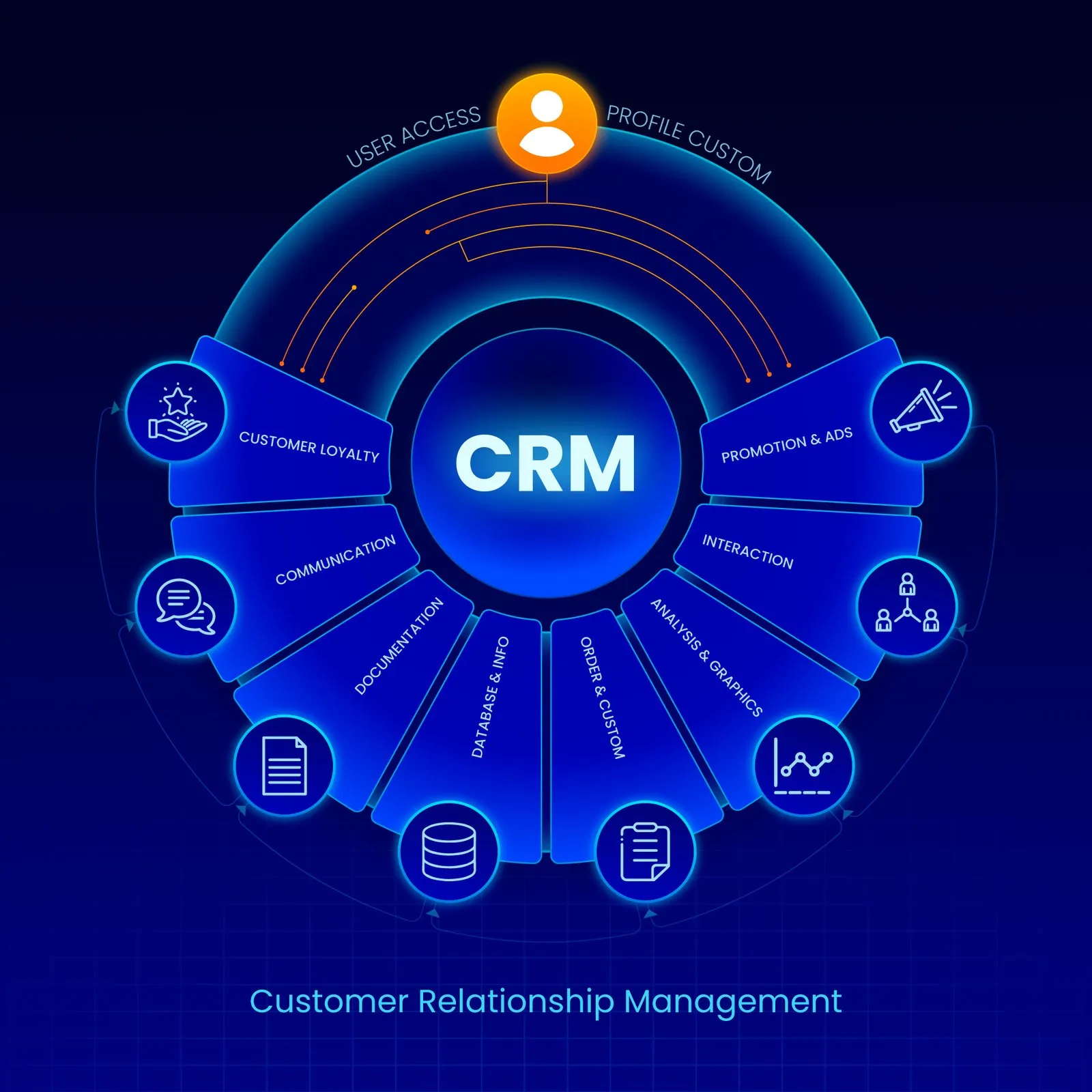
The table below summarises the features that matter most for dealerships and why.
| Feature | Why it matters for a dealership |
|---|---|
| Multi-channel lead capture | Brings website, portal, phone and walk-in enquiries into one place |
| Automatic lead assignment | Routes enquiries to the right branch or consultant quickly |
| Vehicle-centric customer profiles | Links customers to vehicles of interest and vehicles owned |
| Test drive management | Schedules drives and triggers follow-up tasks |
| Visual sales pipeline | Shows deal stages and highlights stalled opportunities |
| Follow-up automation | Sends reminders and templated messages so no lead is forgotten |
| Service and renewal reminders | Keeps owners returning to your workshop |
| Reports and dashboards | Tracks lead sources, conversion and consultant performance |
| Mobile access | Lets consultants update records from the showroom floor or on the road |
| Role-based permissions | Protects customer data and controls who sees what |
| Integration with your DMS | Shares inventory, sales and service data across departments |
Integration with Your Dealer Management System
A CRM is most powerful when it is connected to the rest of the dealership. When your CRM works alongside a dealer management system, consultants can check live vehicle stock while talking to a customer, bookings flow into sales and accounts, and service records feed directly into retention campaigns. Disconnected systems, by contrast, lead to duplicate data entry and conflicting customer records.
Improving Sales Team Performance with CRM
A CRM is not only a database; it is a management tool for the showroom.
Clear Daily Priorities
Each consultant starts the day with a list of tasks: calls to return, test drives to confirm and quotations to chase. This keeps the team focused on the prospects most likely to buy.
Less Admin, More Selling
Automation removes much of the repetitive work, such as logging enquiries, sending confirmations and updating deal stages. Consultants can spend more time with customers on the showroom floor.
Better Collaboration
When a consultant is on leave or a customer visits a different branch, colleagues can see the full history and continue the conversation smoothly. Sales, finance, insurance and service teams all work from the same information.
Coaching Based on Data
Sales managers can review metrics that matter, such as:
- Response time to new enquiries
- Test drive to booking conversion
- Lead conversion by source
- Number of follow-ups per prospect
- Pipeline value by consultant or branch
These insights make coaching specific. Instead of “sell more”, a manager can say “your test drives are strong, but follow-ups after quotation need attention”.
More Realistic Forecasting
Because every deal sits in a defined stage, managers can estimate upcoming bookings and deliveries more accurately and plan stock, staffing and promotions accordingly.
Example: From Spreadsheets to a Connected Showroom
Consider a typical multi-brand dealership that manages enquiries through spreadsheets, shared inboxes and consultants’ personal phones. Portal leads sit unread over the weekend, test drive follow-ups depend on individual memory, and managers only learn about lost deals after the fact. Service customers receive reminders irregularly, if at all.
After moving to an automotive CRM, the picture changes:
- Website, portal and walk-in enquiries land in one queue and are assigned by branch and brand
- Every test drive automatically creates a follow-up task for the consultant
- Managers review the pipeline each morning and step in on stalled deals
- Service due reminders go out on schedule, and post-service feedback is recorded
- Lead source reports show which campaigns and portals produce real bookings
The dealership has not added staff; it has given the existing team a shared process and the visibility to run it well.
AI and the Future of Automotive CRM
Artificial intelligence is making automotive CRM more proactive. Capabilities that are becoming more common include:
- Predictive lead scoring that highlights buyers showing strong purchase intent
- Next-best-action suggestions, such as when to call or which offer to share
- Conversational assistants and chatbots that answer common questions on websites and messaging apps, and capture leads outside showroom hours
- Smarter retention, identifying customers who may be due for a service, renewal or upgrade
- Hyper-personalised campaigns based on vehicle ownership and past interactions
Mobile-first CRM is also important for dealerships, as consultants increasingly work from tablets on the showroom floor and field teams visit customers at home or at work.
How to Choose the Right Automotive CRM
Use this checklist when comparing platforms:
- Is it built for automotive? Look for vehicle-centric records, test drive management and service reminders, not just generic deals and contacts.
- Does it capture leads from all your channels? Website, portals, social media, phone and walk-ins should all flow into one place.
- Will your team actually use it? A clean interface and a good mobile app matter more than a long feature list.
- Does it connect to your DMS? Shared inventory, sales and service data avoids double entry.
- Can it be configured to your process? Pipeline stages, follow-up rules and reports should match how your dealership works.
- Does it scale? It should support more users, branches and brands as you grow.
- Is customer data secure? Check role-based access, backups and data protection controls.
- What support and training are included? Implementation help often decides whether adoption succeeds.
Common CRM Implementation Challenges
Even the best software needs a thoughtful rollout. Watch out for:
- Low user adoption. Involve consultants and service advisors early and keep processes simple.
- Messy data migration. Clean up duplicate and outdated customer records before importing.
- Over-complicated workflows. Start with core processes, then add automation gradually.
- Insufficient training. Plan role-specific training for sales, service and management teams.
- Unclear ownership. Assign someone to monitor data quality and usage after go-live.
Conclusion
For car dealerships, CRM is no longer optional. Buyers move quickly between channels, and the dealership that responds fastest, follows up consistently and stays in touch after delivery is the one that wins both the sale and the service relationship.
An automotive CRM brings lead capture, test drive follow-ups, pipeline management, service reminders and loyalty campaigns into one connected system. Combined with a dealer management system, it gives your team a complete view of every customer and vehicle.
To see how this works in practice, explore AutoTech360’s automotive CRM or book a demo with our team.
Frequently Asked Questions
What is automotive CRM?
Automotive CRM is customer relationship management software tailored to car dealerships and automotive businesses. It tracks enquiries, test drives, quotations, bookings, deliveries and service visits in a single customer record.
How is a dealership CRM different from a generic CRM?
A dealership CRM is built around vehicles as well as people. It links customers to the models they are interested in and the vehicles they own, and includes automotive workflows such as test drive scheduling, exchange enquiries and service reminders.
How does CRM help close more car sales?
It captures every lead, assigns it quickly, reminds consultants to follow up after test drives and quotations, and gives managers a pipeline view to rescue stalled deals. Fewer enquiries are lost, and buyers get faster, more relevant responses.
Can a CRM help the service department?
Yes. Service reminders, warranty and insurance renewal follow-ups, service history and post-service feedback all help keep vehicle owners returning to your workshop.
What is the difference between a CRM and a DMS?
A CRM focuses on customer relationships, leads, follow-ups and retention. A dealer management system runs wider dealership operations such as inventory, sales transactions, service and accounts. The two work best when integrated.
Is automotive CRM suitable for small dealerships?
Yes. Smaller dealerships often benefit quickly because a CRM replaces manual tracking and ensures no enquiry is missed, even with a small sales team.